
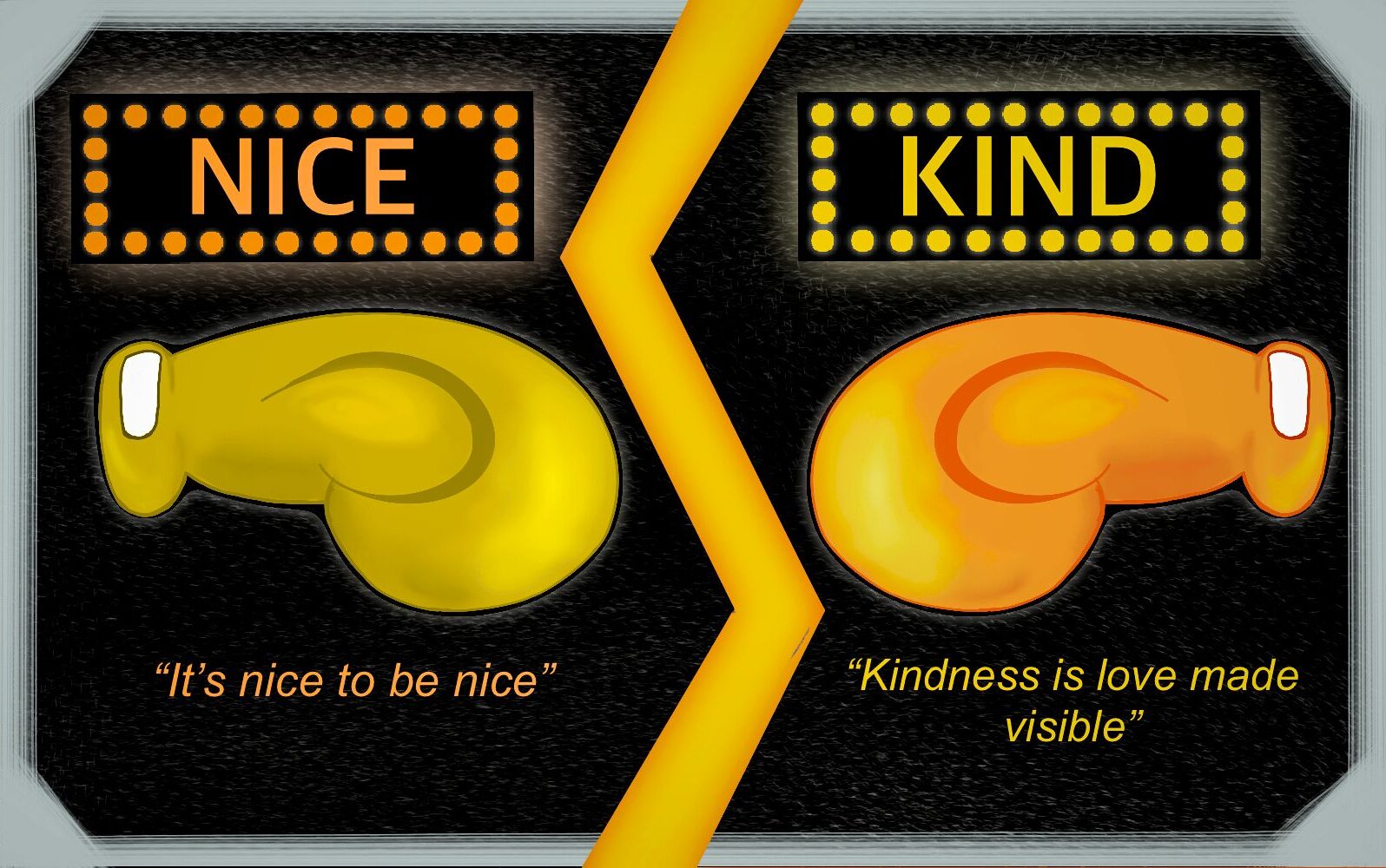
From time to time, I watch old videos of bad X-factor auditions. I always wonder about the family and friends of the acts. Surely, there must have been a moment when the auditionee came to them to ask for opinions on their singing. In that moment they had the option to either be nice or kind. The nice thing to do would be to compliment the few notes the act sang on key and cheer them on. In doing this, good relations are maintained, and the singer feels good about themselves (even if your ears don’t). However, this isn’t really in their best interest. On the other hand, the kind response would be to have a difficult conversation, not necessarily crush their dreams, but instead, point them in the direction of a vocal coach rather than onto Simon Cowell’s stage. But this comes with the risk of rupturing the relationship and it’s an uncomfortable interaction. So, do you opt to be nice or kind?
Niceness is overvalued
To be nice is to be pleasant or polite. It helps us live in a peaceful and harmonious world but it’s also very superficial. Niceness requires no true care or concern for others and is generally more focused on self-interest. You are seeking to present your character in a positive light in order to gain external validation. This means avoiding conflict, bending to the will of others and even betraying yourself, in order to maintain an agreeable facade. Nice can also be defined as being ‘satisfactory’ – you are meeting the needs and expectations of those around you, but you are not doing anything exceptional. In other words, niceness is of little value, it helps maintain the status quo, but does nothing to truly enhance your existence. Kindness, on the other hand, is something to strive for.
The word ‘kind’ can be defined as:
“Generous, helpful, and thinking about other people’s feelings”1
It is a selfless act, showing genuine consideration to others. In being kind, you are trying to work in people’s best interest, even if it means causing discomfort and unpleasantness at the time. It requires empathy and time, for you to invest yourself in another person, not to just smile, wave and exchange superficial pleasantries every time you see them. It is based on the understanding that everything will not be peachy and perfect all the time, but we can celebrate the goodness today brings and work through the craziness that life throws our way. This allows for real social awareness and deeper interpersonal connections.
Kindness is also applying the same generosity, care and concern to yourself. It means not betraying yourself for the approval of others and understanding that not everyone is destined to be your friend. It is also about knowing your own boundaries, personal limits and when to say no. After all, what can you really give to others when you are running on empty?
Niceness vs Kindness
Niceness vs kindness is essentially quantity vs quality. While niceness can amount to a large quantity of connections with others, it is kindness that gives them quality. It is easy to be nice and, a lot of the time, it’s nice to be nice, but niceness shouldn’t be a priority. It is the deeper connections formed from giving and receiving kindness that will really benefit you. Yes, it may be uncomfortable and yes there may be conflict, but the long-term gains of kindness far outweigh the short-term benefits of niceness.
No matter how pure the intentions were of the family and friends of the terrible X-factor acts, I’m pretty sure when the auditionees got 4 noes from the judges and had millions of people laughing at them, there was nothing nice about it.
This Post Has 2 Comments
Well Laid out, unfortunately the reward of opening the truth to anyone in order to save them from an impending embarrassment often result in premature enmity. An ‘un-balance’ world we live in!
Like you said. Being nieces is eariers than being kind. So the quality of the person on the other side could also determine where to place them.
But it a tough call for those you love and don’t want to hurt.