
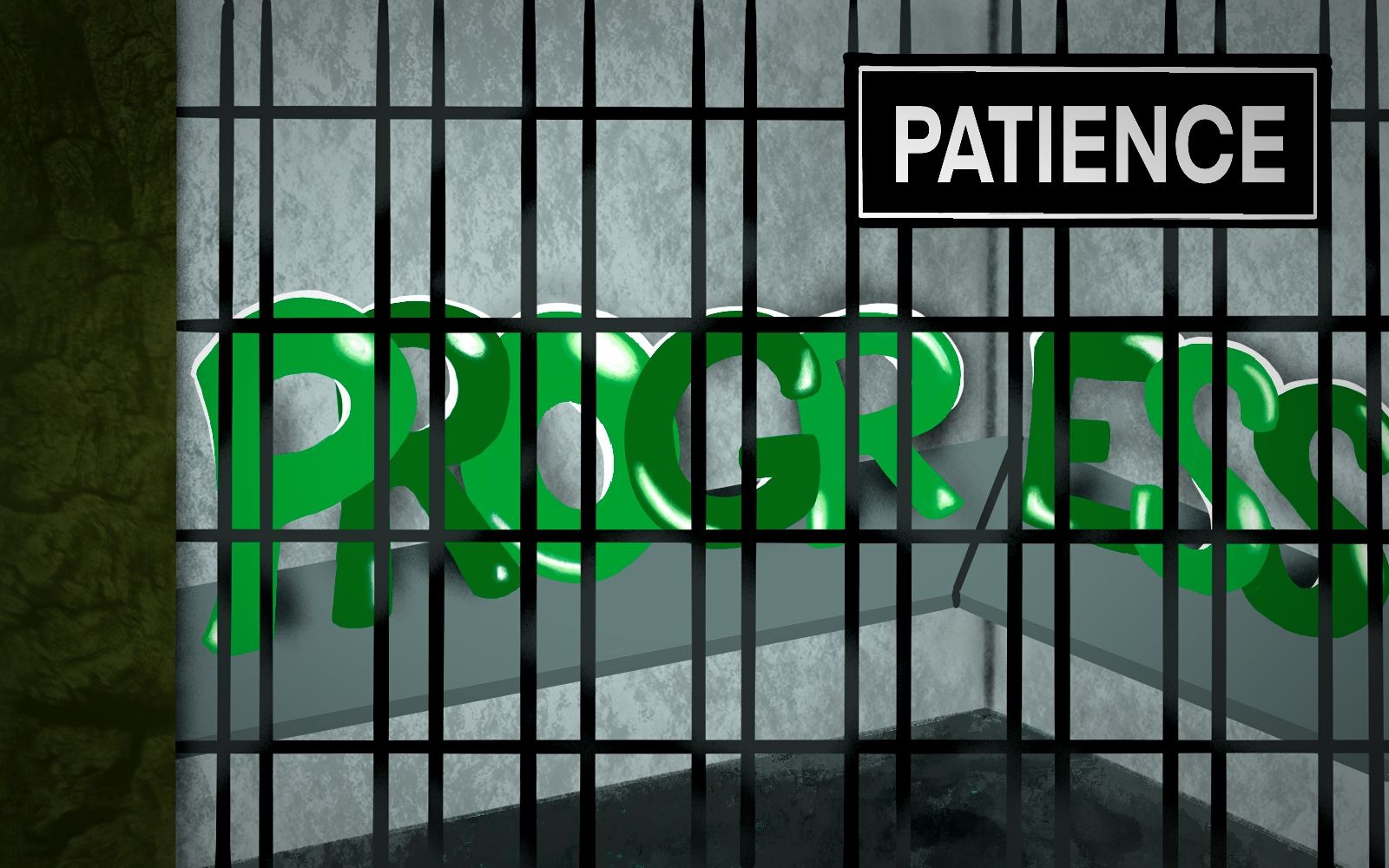
There are three key contributors to progress: hard work, consistency and patience. For me, patience has always been the most difficult. Despite the innumerable times “patience is a virtue” was preached during my upbringing, I would always find it to be more of a prison. A cell that held progress and desired results captive, until the sentence was served.
However, in recent times, I’ve discovered that patience isn’t just a passive waiting game, but it can be an active preparation period.
What is Patience?
Patience can be defined as:
“The ability to endure difficult circumstances such as perseverance in the face of delay.”1
Patience is persistence, a call to slow down, not to wait. Perseverance is active. It is more than just repeatedly knocking at the same door until it opens; it’s also about using the waiting time to prepare yourself for what is to come.
A lot of the time progress is not trapped behind patience, but rather, achieved through it. It provides time for the consistent practise of small habits to cumulate into larger achievements. It provides the opportunity to build up skills, knowledge and experience that will propel you forward when the right opportunities come your way. It gives you a chance to reflect and regroup.
The Mandela Model
One of the best examples of patience I’ve seen is the life of Nelson Mandela. Mandela grew up in a very divided South Africa, with severe racial inequality. He witnessed the discrimination he faced be written into legislation with the implementation of the Apartheid, then he spent almost 50 years fighting alongside others to end the government oppression of his people.
During the fight, he endured 27 years of imprisonment. He was taken off the front lines; forced to sit back and hear about the persecution and deaths of family members, unable to act in their defence. However, his time in prison was not spent idly waiting.
While Mandala couldn’t directly lead the march for equality on a nationwide scale, he was able to fight for improved prison conditions. When he wasn’t leading hunger strike protests for reform, he consistently practised good daily habits in order to maintain his fitness level and keep him mentally sharp. He also kept up correspondence with anti-apartheid activists in the mainland and earnt a bachelor’s degree. In addition to all of this, while incarcerated he drafted the majority of his autobiography, a book which is now a key piece of literature when studying the history of South Africa.
Mandela’s life exemplified a combination of drive, patience and perseverance. He had little influence over the amount of time he spent behind bars, however, he could control what he did with it. He didn’t achieve his success by waiting out his sentence and then going on to bigger and better things. He achieved progress through being active in the waiting period. So, when the prison gates finally opened, he was ready for the next stage of the fight.
Progress is bred out of patience. It is not simply passively waiting for your desired outcome (though sometimes that is part of the process); it is working through the waiting to prepare you for when the gates are lifted.
This Post Has 4 Comments
Well done Ife….absolutely applies to every human life…..great read, thanks!!!
Great piece here. Another eye opener and a clearer angle to the concept of patience not being a prisoner but rather an opportunity for progress.
Patience has a great connection with time and time is one of the greatest resource given to everyone without inequality. Time is also a medium of exchange. What you invest your time into yield dividends for you whether good or bad. Judicial use of time and genuine intentionality is crucial to obtaining desired result of patience.
Good one, Patience give victory to the battles in life. Patience help you to get to where God want to take you to, you need it when walking with God. That is only way for you to get what belong to you on earth. Patience is needed in whatever you want to do.
Great piece.