
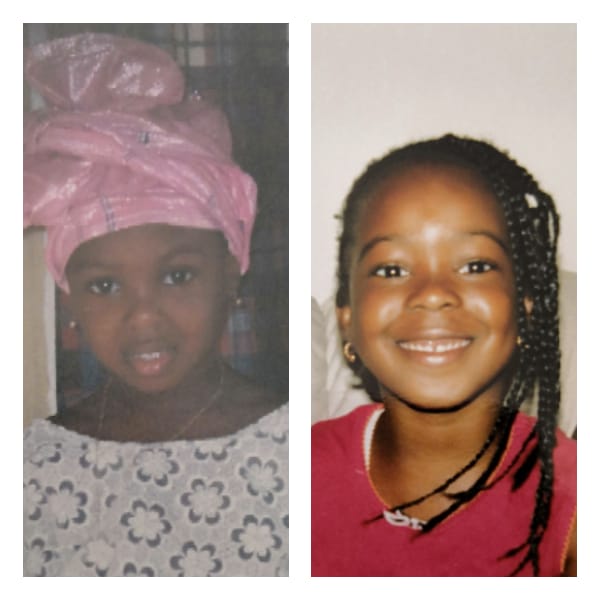
“Kílódé?”
(Translation: What is wrong?)
It’s Easter time, which means that I get to spend a few weeks back at my family home. I come from a Nigerian family and my parents are from the Yoruba tribe. So, during this period I tend to cross paths with a lot of Yoruba people, and over the years I’ve noticed a common trend. The vast majority of them come to me with the assumption that I don’t understand the Yoruba language.
When I was younger, I loved it when adults assumed this. The reality was that I could understand every word they spoke. So, I would take full advantage of these situations, using them to play out my spy fantasies. I would hide on the stairs, just out of sight of the lounge, and secretly listen in on their ‘adult conversations’. Sometimes they would just talk around me unaware that I was eavesdropping on their chatter. It wouldn’t be until I responded to something they said that their eyes would grow wide in surprise and they would turn to my parents to confirm that I was not as ignorant as they previously thought. It was a key source of entertainment for me as a child, but the older I grew the more the situation began to annoy me. There was something inherently wrong about their general disposition. Why is it that they always assumed that anyone they met of my generation wouldn’t speak or understand their mother tongue? After all, aren’t they the ones that were meant to be passing it down to us?
I was raised in a part of the UK that lacked racial diversity. In my primary school there was only one other black family, who just happened to be Yoruba, and their son was in my class. He also understood the language so from time to time we would have mini conversations and pass notes to one another with different Yoruba insults on them. It was something that connected us and helped us engage with Nigerian culture. It was a very enjoyable time, however since then, I’ve only had a handful of these sort of interactions. As I grew up, I discovered that being someone who understood Yoruba and was semi-fluent was more of an anomaly than a norm for a person of my age. I have been in so many households where parents are speaking Yoruba (and other tribal tongues) around the house, and their children are in the midst of it, oblivious to what is being said. What surprised me even more was to see this happen a lot within Nigeria.
Now, I do appreciate that there are many reasons that this happens, especially in this day and age. In Nigeria the national language is English, and the country consumes a lot of western films, TV and media. There is a need to speak English and some perceive tribal tongues to be uncivilized. A variety of circumstances can also make it difficult to teach children the language.
Nigerian- American novelist Tomi Adeyemi said her parents didn’t teach her and her siblings Yoruba because they wanted a ‘secret language’ that they could communicate in that the kids couldn’t understand. I am not a parent and am in no position to advise people on how to raise their kids, but I am sure there are other ways to have private conversations that you don’t want your children to hear. By elders not passing the language on, I feel like the younger generations are missing out on something great.
There are many things I love about the Yoruba language. There is a certain descriptiveness and lyricism to it. There are also so many beautiful (and strange) proverbs and sayings that have come from it. Although I am not completely fluent, I find that there are a few things I can articulate better in it than I can in the English language. That’s why you’ll find me venting a lot of my frustrations in a cocktail of the two tongues. It adds an extra layer of colour to communication.
Last year, while I was in the markets in Dubai, I was surprised how many local vendors were calling out Yoruba greetings and phrases in an attempt to get my attention. This highlighted two things to me. One, how willing Nigerians, especially the Yorubas, were to share their culture with others and teach them their language. And two, how a shared tongue is used to reach out to others and bridge gaps. I feel that allowing younger generations to grow up ignorant to their tribal tongue, is not only a disservice to the youth, but also creates further division and disconnect between the generations.
As someone who was born in Nigeria but raised in the UK, I have benefitted so much from my ability to understand my parent’s mother tongue. In a confusing and ever-changing world, it has helped me stay in touch with my heritage and develop my unique cultural identity. It has provided another means of connecting with my elders and has been a source of entertainment. It is one of the many things I love about the Nigerian culture, and I would hate to see the language die out.
This Post Has 2 Comments
I share your views completely, this generation is gradually watching the Yoruba language go into extinction, my heart bleeds. I just hope the Whites won’t end up coming back to teach the language to our grandchildren since we have refused to do the right thing. Let’s hope people will hear…… And make a commitment to do the right thing.
So true and good to read the views of a talented young adult on this unfortunate concept of some Naija (Nigerian) parents failing to pass on their mother tongue to their children. I believe part of the narrative is the long passed down society view that anything African is less prestigious. However, make no mistake, the narrative is changing fast. Thanks to people like you, Ife and others before you such as Chimamanda Adichie.
Keep up the good work. Your generation needs to continue to challenge ours, the older black generation.